The gift of life: Sophie’s transplant journey
If you were told you need a lifesaving kidney transplant, who would you turn to for help? Your immediate family? Your best friend? But what if they couldn’t help?
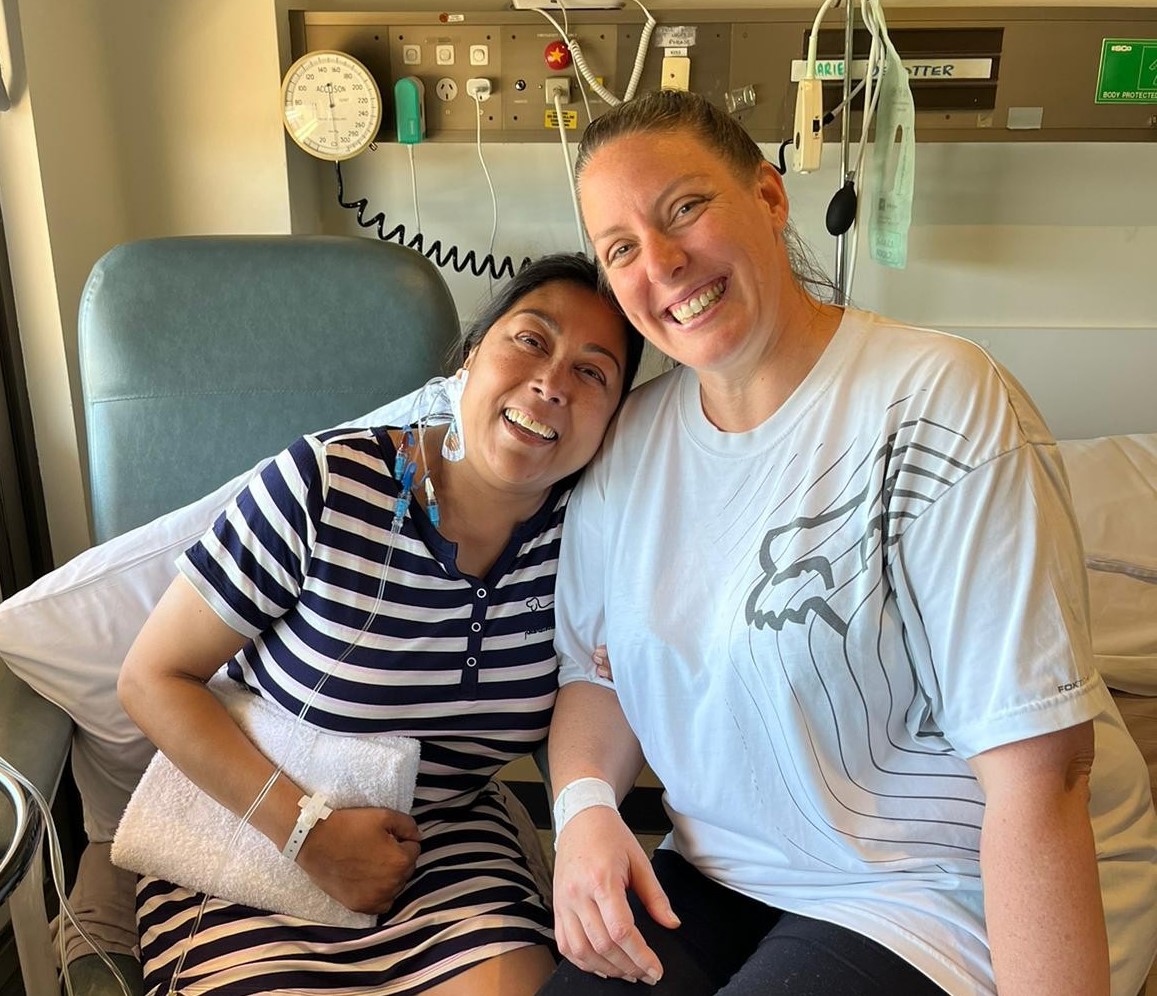
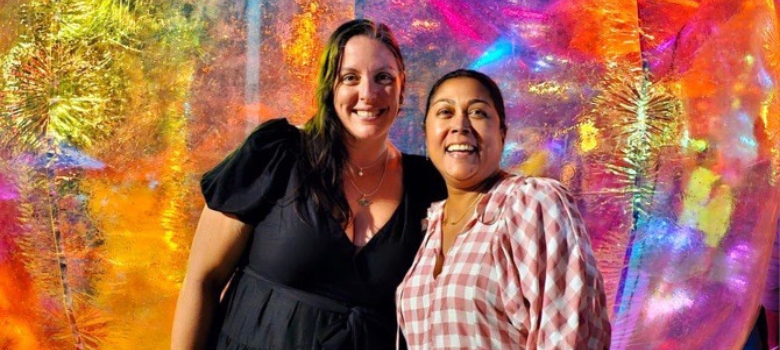
Never in your wildest dreams would you imagine your colleague would be the one to volunteer to donate their kidney to you – but this is exactly what happened for HSS Senior Human Resources (HR) Business Partner Sophie Decotter, when her colleague, NMHS Senior HR Business Partner Megan Waterhouse, did just that.
A life changing diagnosis
In 2001 at only 25 years old, Sophie was diagnosed with Lupus, which is a chronic autoimmune disease where the body's immune system mistakenly attacks healthy tissues and organs. Sophie’s kidneys were under attack a few years later, but she was able to manage it with medication for over a decade.
During this time, Sophie led a fairly ‘normal’ life, working in HR at WA Health and even building a family with her husband, when their daughter Zara was born in 2013.
Bringing Sophie into a rare minority of those with Lupus, the medication stopped eventually being enough. In 2020, her kidney function stopped and she had to start dialysis.
The following years were characterised by severe illness and regular hospital visits, all while continuing to raise her young daughter, and work in the HR team at Sir Charles Gairdner Hospital (SCGH).
Sophie was referred to the SCGH WA Liver and Kidney Service and placed on the kidney transplant waiting list. While the search began for a suitable donor, she commenced dialysis to keep her alive.
However, Sophie's condition continued to deteriorate, and she spent the next two years fighting for her life. She was forced to stop working, became bedridden, and came close to losing her battle on two or three occasions.
"At only six years old, Zara was already having to help me in ways no child should have to, even with simple tasks like helping me shower when my husband had to work," Sophie said. "I felt so incredibly guilty – it was heartbreaking."
As her health declined further, dialysis was no longer enough to keep her alive, making a kidney transplant her only chance of survival.
Searching for a life-saving kidney
“Many people around me wanted to get tested and see if their kidney could save my life – family, friends, colleagues – butnone of them were appropriate for a variety of reasons and my pool of potential donors was getting smaller,” Sophie said.
“Eventually my colleague Megan approached me about wanting to get tested. We had met around 2015 on the Swan Districts Hospital decommissioning project team and had worked together in HR since – her portfolio actually included the WA Liver and Kidney Service at SCGH.
“While I was grateful for her offer, I was feeling disheartened for not finding a match – while dialysis kept me alive, I was so sick” Sophie explained. “I was told that kidney donors typically needed to be genetically similar to you. I am Mauritian and Megan is not – I didn’t have much hope.”
Being tested for kidney compatibility is an arduous, year-long process, and includes assessments of both your physical and psychological suitability. But Megan followed through the whole process, was found be eligible to be the kidney donor, and after a year was able to officially offer her kidney to Sophie. This is an outcome that, so Sophie, was next to a miracle.
“I just remember wondering why Megan would want to do this for me. While we were friends, we weren’t besties. I would have never asked her to consider donating an organ for me,” Sophie said.
“I couldn’t fathom that my colleague would be so committed to seeing this through, which would involve her undergoing major surgery and changing her life forever, to gift me her kidney.”
A crushing complication at the last minute
On Monday 14 November 2022, Sophie received a phone call to inform her that surgery was locked in for the following month and she was instructed on how to start preparing her body for her new kidney.
On Tuesday 15November 2022, Sophie felt a bit unwell but didn’t think much of it – she was always unwell at this point in her life.
On Wednesday 16 November 2022, Sophie had a heart attack and she was admitted to hospital. Her body was no longer strong enough to receive her new kidney and the surgery was cancelled.
The last attempt
Nearly a year since Sophie suffered her heart attack and dialysis is just keeping her alive, but is agreeing with her body less and less. Eventually, Sophie and her cardiologist had to make an impossible choice.
Sophie could either continue the current course of dialysis, knowing that she wouldn’t watch Zara grow up but would have a little bit more time.
Or they could work to get her body as strong as possible and then risk everything, by taking her off some of the blood thinners helping to keep her alive, but enabling her to undergo transplant surgery.
Sophie knew what she needed to do.
However, having been in hospital since her heart attack, Sophie hadn’t spoken to Megan for nearly a year and was anxious that Megan may have changed her mind about making this sacrifice. But Megan didn’t hesitate and immediately agreed to the last-minute opening on the surgery schedule, on Wednesday 11 October 2023.
When the big day came, Megan went into surgery first to have her kidney removed. Soon after, Sophie was rolled into the operating room at SCGH, where her life-saving kidney transplant was completed.
Three years on
The recovery from surgery for both Megan and Sophie was long and difficult.
Megan now has one kidney, has to have annual reviews with her nephrologist (kidney specialist), and will always have to be mindful of the risks having one kidney presents.
Sophie will always need to be regularly assessed by doctors. It started as every two days following discharge from hospital and after nearly three years, has finally reduced to bi-monthly. She will also be on medication to prevent her body from rejecting the kidney for the rest of her life.
“Being that unwell, I learned to see life differently,” Sophie explained.
“I would dream about being able to go to work and I desperately missed having the strength to exercise – these are things I will never take for granted.”
After talking about it while Sophie was at her sickest, she and her husband finally took Zara to Disneyland earlier this year – something that once seemed like a pipe dream.
“I wanted so badly to take Zara when she was little but am so grateful they we could give her that experience at 13. There were a lot of tears that day.”
The ultimate gift
So what would bring someone to want to donate their kidney to their colleague? This is something Sophie has thought about a lot.
“During the year where I was in hospital following my heart attack, I was so anxious that Megan would change her mind – and I would never have blamed her for that,” Sophie said.
“Megan met her now-partner during that year and he later told me that the day they met, she told him “I’m giving my kidney to someone”. It turns out she never faltered.”
Sophie explained that she’ll never forget what Megan said when Sophie asked her why – “I lost my mum when I was in my 30s. Zara is way too young to lose hers.”
“Megan will obviously always be a part of me in the most literal way. She saved my life and is family,” Sophie continued.
Megan explained that her choice to donate to Sophie was a simple, straightforward decision which was fully supported fully by her loved ones.
“At the time I had no children, no partner, no nieces, no nephews. My dad was already elderly, and my extended family are well resourced with their own offspring should they ever need an organ,” Megan said.
“I would come to work every day, sitting next to Sophie and seeing her so sick – it felt like such an injustice. Sophie is such a special, kind-hearted, and loving person who has fought so long and so hard for everything she has – her health, her life in Australia, her daughter. I recall thinking that someone has to do something and then realised that could be me.”
Sharing a funny anecdote – Sophie said that prior to the transplant, she never had a sweet tooth but Megan did.
“Now, I have the sweet tooth and Megan lost hers! It’s like the love of sweets comes straight from the kidney!” she laughed.
DonateLife Week
This year, DonateLife Week is from Sunday26 July to Sunday 2 August, and serves as a reminder to consider registering as a potential organ and tissue donor.
There are currently around 2,000 Australians on the waitlist and a further 14,000 just like Sophie, who are currently on dialysis for kidney failure.
“Anyone can need a transplant, from babies to the elderly,” Sophie said.
“And typically they need to be genetically similar – we need people of all ages and backgrounds to register as potential donors and communicate with their families about their wish to donate.
“Until it was me needing a kidney, the idea of registering as a donor hadn’t really crossed my mind. But right now, thousands of Australians don’t have the luxury of not having to think about donations, waiting every day for that life-saving phone call.”
Megan added that WA Health goes above and beyond to enable people to donate with paid donor leave.
“It is a little known, and highly under-publicised, fact that our employment agreements provide for donor leave,” Megan said. “I was granted six weeks of paid donor leave and one week of paid personal leave that made sure I was financially supported to do this.”
It takes one minute with your Medicare Card to register as an organ and tissue donor. You can register right now at www.donatelife.gov.au/register-donor-today